Surgery has changed significantly over the past few decades. Many procedures that once required a large incision can now be performed through a few small openings using laparoscopic surgery, commonly called keyhole surgery.
Minimally invasive and technology-assisted procedures continue to be an important healthcare trend because they can support greater surgical precision, smaller incisions and faster postoperative recovery in appropriately selected patients.
At Arasan Hospital, Thalakudi, near Lalgudi and Trichy, patients can receive evaluation and treatment for common general-surgical conditions, including hernia, appendix problems, gallbladder disease, piles, fissure, fistula and diabetic-foot complications.
What is laparoscopic surgery?
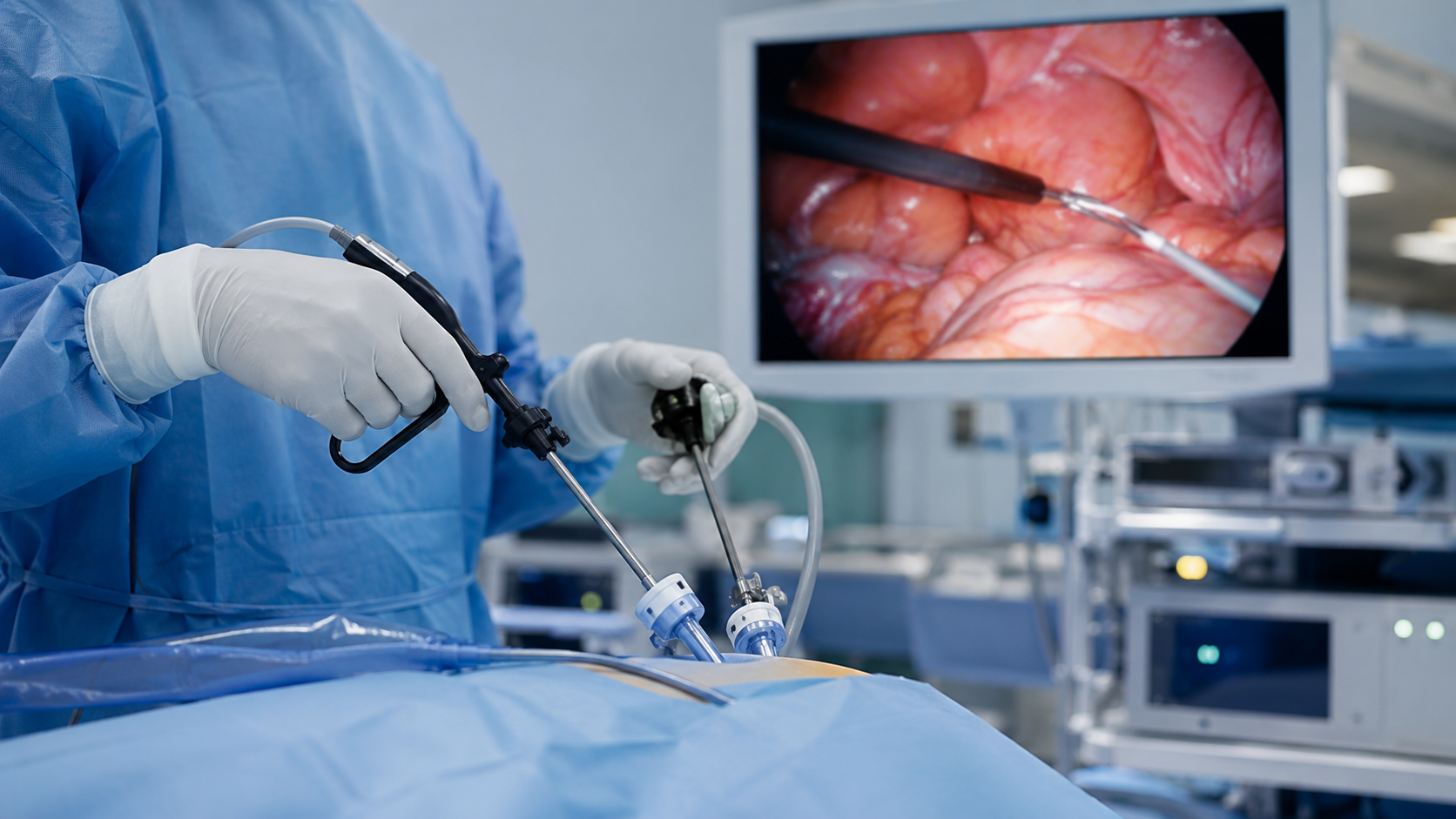
Laparoscopic surgery is a minimally invasive technique in which the surgeon makes a few small incisions instead of one large cut.
A thin instrument called a laparoscope is inserted through one of these openings. It contains a camera and light source that display magnified images of the internal organs on a monitor. The surgeon then performs the procedure using specialised instruments inserted through the other openings.
The exact surgical approach depends on the medical condition, the patient’s overall health and the surgeon’s clinical assessment.
Why is laparoscopic surgery becoming popular?
Patients increasingly prefer treatments that reduce discomfort and help them return to normal life sooner. Healthcare systems are also placing greater emphasis on technology-supported, patient-centred care.
Digital health and advanced medical technologies are increasingly being used to strengthen healthcare delivery and improve access, efficiency and patient outcomes.
However, laparoscopic surgery is not automatically the best choice for every patient. A surgeon must first evaluate the condition, medical history, test results and possible risks.
Major benefits of laparoscopic surgery
1. Smaller incisions
Laparoscopic procedures usually require several small openings rather than one long surgical incision. This may result in smaller scars after healing.
2. Less postoperative pain
Because the incisions are generally smaller, many patients experience less wound-related discomfort than they might after conventional open surgery.
Pain levels can still vary depending on the procedure, the patient and the complexity of the condition.
3. Shorter hospital stay
Some patients undergoing uncomplicated laparoscopic procedures may be discharged earlier than patients undergoing open surgery.
The actual discharge time depends on recovery, vital signs, pain control, food tolerance and the surgeon’s advice.
4. Faster return to routine activities
Many patients can gradually resume walking, household activities and work sooner after minimally invasive surgery.
Heavy lifting and strenuous exercise must still be avoided until the surgeon confirms that healing is adequate.
5. Lower risk of certain wound complications
Smaller surgical wounds may reduce the risk of some incision-related complications. Nevertheless, every surgery carries potential risks, including infection, bleeding, anaesthesia-related problems and injury to surrounding structures.
6. Better internal visualisation
The laparoscopic camera provides a magnified view of the surgical area. This can help the surgeon work with precision during suitable procedures.
Conditions commonly treated through laparoscopic surgery
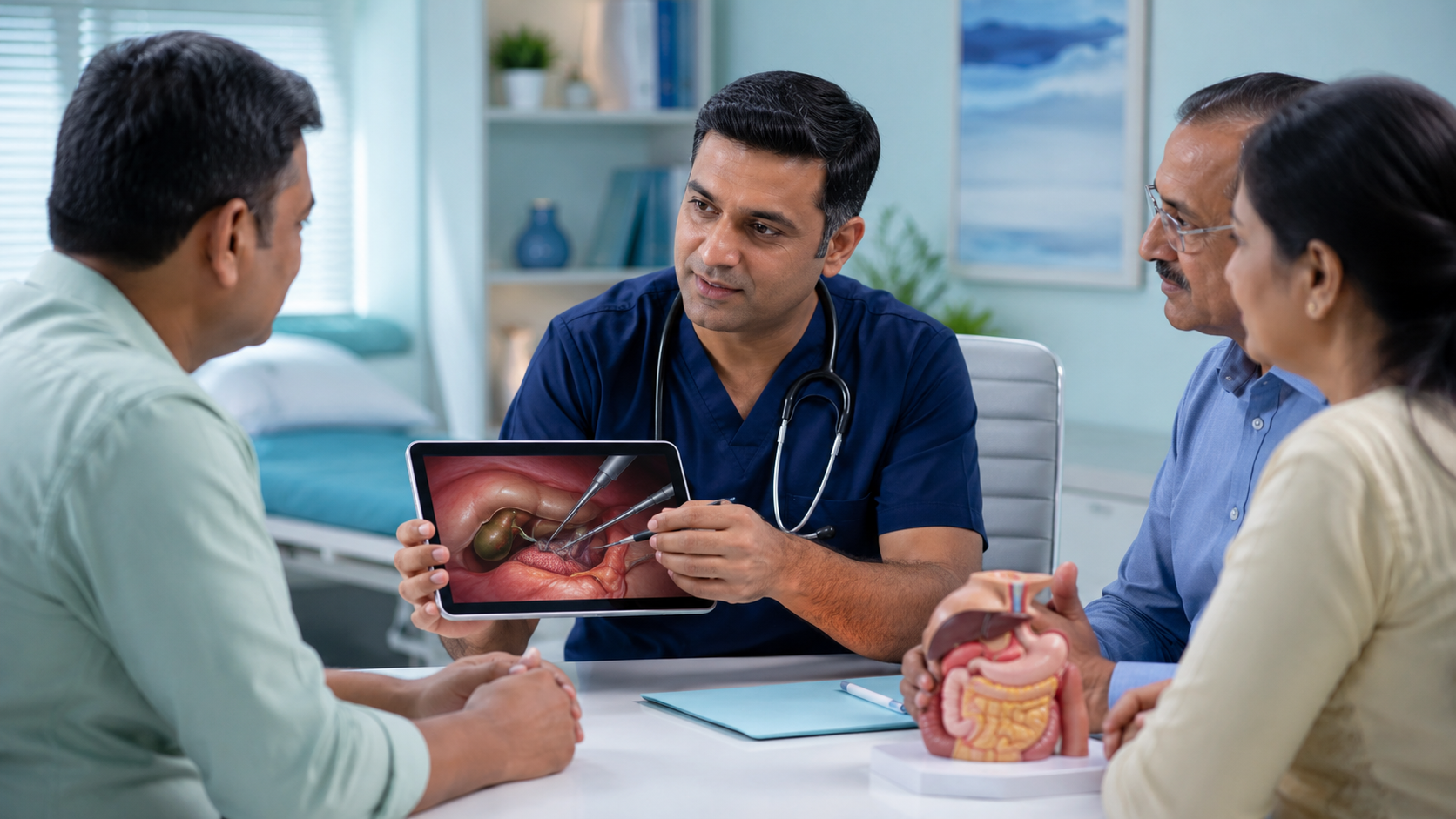
Laparoscopic gallbladder surgery
Gallstones can cause severe upper-abdominal pain, nausea, vomiting, indigestion or inflammation of the gallbladder.
When surgery is required, the gallbladder may be removed through a procedure called laparoscopic cholecystectomy.
Seek urgent medical attention when abdominal pain is accompanied by:
- Fever or chills
- Persistent vomiting
- Yellowing of the eyes or skin
- Severe or worsening pain
- Abdominal swelling
Laparoscopic appendix surgery
Appendicitis occurs when the appendix becomes inflamed. It commonly causes pain that may begin near the navel and later shift toward the lower-right abdomen.
Other symptoms can include fever, nausea, vomiting and loss of appetite.
Appendicitis may become an emergency because an untreated appendix can rupture. Do not delay medical evaluation when appendicitis is suspected.
Laparoscopic hernia repair
A hernia develops when tissue or part of an internal organ pushes through a weak area in the abdominal wall.
Common symptoms include:
- A visible or noticeable swelling
- Discomfort while coughing or lifting
- Heaviness in the groin or abdomen
- Pain during prolonged standing
- A swelling that reduces while lying down
Some hernias can be repaired laparoscopically. The appropriate technique depends on the hernia’s type, size, location, recurrence history and the patient’s health.
A painful swelling that becomes hard, cannot be pushed back or is associated with vomiting requires immediate medical attention.
Is laparoscopic surgery suitable for everyone?
Not necessarily. Open surgery may be safer or more appropriate in certain situations, such as:
- Extensive infection or inflammation
- Complicated or very large hernias
- Previous abdominal operations with significant scar tissue
- Serious heart or lung conditions
- Emergency situations involving internal bleeding or perforation
- Technical difficulties identified during surgery
A laparoscopic procedure may occasionally need to be converted to open surgery for patient safety. This is a recognised surgical decision rather than a treatment failure.
What happens before surgery?
Before recommending surgery, the doctor may conduct a physical examination and request investigations such as:
- Blood tests
- Urine tests
- Ultrasound scan
- ECG
- Chest evaluation
- CT scan, when clinically necessary
- Anaesthetic fitness assessment
Patients must inform the doctor about diabetes, high blood pressure, allergies, pregnancy, previous operations and all medicines being taken.
Blood-thinning medicines should never be stopped without medical advice.
What happens on the day of surgery?
Patients are usually instructed not to eat or drink for a specified period before anaesthesia.
After admission:
- The medical team checks the patient’s reports and vital signs.
- The anaesthetist completes the preoperative assessment.
- The surgeon confirms the planned procedure and obtains informed consent.
- The surgery is performed under suitable anaesthesia.
- The patient is monitored in the recovery area.
- Oral fluids, food and walking are gradually introduced as advised.
These steps may vary according to the procedure and the patient’s condition.
Recovery after laparoscopic surgery
Recovery time is different for every patient. Some people feel comfortable within a few days, while others require a longer period.
During recovery:
- Take prescribed medicines correctly.
- Keep the surgical wound clean and dry.
- Walk gently as advised to reduce stiffness.
- Avoid lifting heavy objects.
- Follow the recommended diet.
- Attend scheduled follow-up appointments.
- Do not drive until the doctor confirms that it is safe.
The surgeon will provide procedure-specific instructions regarding bathing, dressing changes, work, exercise and food.
Warning signs after surgery
Contact the hospital promptly when there is:
- Persistent or increasing abdominal pain
- High fever
- Continuous vomiting
- Redness, swelling or discharge from the wound
- Increasing abdominal distension
- Difficulty breathing
- Unusual bleeding
- Inability to eat, drink or pass urine
- Sudden weakness or fainting
Early communication can help identify postoperative complications before they become serious.
How to choose a laparoscopic surgeon in Trichy
When considering laparoscopic surgery, patients should look beyond price alone. Important factors include:
- The surgeon’s qualifications and experience
- Proper preoperative assessment
- Availability of anaesthesia and trained nursing staff
- Sterilisation and infection-control practices
- Emergency and inpatient support
- Transparent explanation of treatment options
- Clear postoperative and follow-up instructions
A trustworthy surgeon should explain the diagnosis, alternatives, expected benefits, possible risks and likely recovery period before surgery.
Laparoscopic and general-surgery care at Arasan Hospital
Arasan Hospital provides general-surgical consultation and related care for patients from Thalakudi, Lalgudi, Samayapuram, Srirangam, Thiruvanaikoil and nearby areas of Tiruchirappalli.
Conditions evaluated include:
- Hernia
- Appendix-related problems
- Gallstones and gallbladder disease
- Piles
- Anal fissure
- Anal fistula
- Diabetic-foot wounds
- Varicose veins
- Other common general-surgical conditions
Hospital information
Arasan Hospital
1, Lalgudi Main Road,
Sri Sathyam Nagar, Thalakudi,
Tiruchirappalli – 621216
OP consultation: 2:00 PM–9:00 PM
Emergency and inpatient services: Available 24×7
Frequently asked questions
Is laparoscopic surgery completely painless?
No surgery is entirely painless. Anaesthesia prevents pain during the procedure, and postoperative discomfort is managed using prescribed medication. Many patients experience less wound pain after laparoscopic surgery than after a comparable open procedure.
How long does laparoscopic surgery take?
The duration depends on the condition, procedure complexity and findings during surgery. The surgeon can provide an estimated duration after evaluating the patient.
Can I go home on the same day?
Some procedures may allow same-day or next-day discharge. Other patients need longer observation. Discharge is based on clinical recovery, not only the type of surgery.
Will there be scars?
Small scars can remain at the incision sites. Their appearance generally reduces over time, although healing differs among individuals.
Can a hernia return after surgery?
Hernias can recur after either open or laparoscopic repair. Following postoperative instructions, maintaining a healthy weight, avoiding tobacco and preventing excessive strain may help reduce the risk.
When can I return to work?
It depends on the operation and the physical demands of the job. Desk-based work may be resumed earlier than work involving lifting or strenuous activity. Follow the surgeon’s advice.
Conclusion
Laparoscopic surgery has transformed the treatment of many common abdominal and general-surgical conditions. Smaller incisions, reduced wound discomfort and faster recovery make it a valuable option for suitable patients.
The safest treatment begins with an accurate diagnosis and a personalised surgical assessment. Anyone experiencing persistent abdominal pain, swelling, vomiting, fever, bleeding or symptoms of a hernia should seek medical evaluation rather than delaying treatment.
Medical disclaimer: This article is intended for general health education and does not replace examination, diagnosis or treatment by a qualified medical professional. Treatment and recovery differ for each patient. In an emergency, contact the nearest hospital immediately.